Silica Gel
Comprehensive packaging solutions engineered for free-flowing granular products. Whether you are packaging sugar, salt, black pepper, instant coffee, or dry yeast, our volumetric cup dosing systems provide exact weight accuracy with minimal product waste. Built for continuous high-speed operation, these lines ensure seamless transitions and maximized throughput for single-serve sticks and sachets.
Packaging Notes
Silica gel exists to absorb moisture — so the machine must not let it start early. Whatever the granules pick up on the line is capacity the end user never receives, which is why a silica gel packaging machine is judged as much by how little air the product sees as by its output. Dry-environment dosing and moisture-tight seals preserve capacity: hoppers stay closed, buffer volumes stay small so that material does not stand waiting above the dosing unit, and the sealing jaws have to close on a clean, dust-free film path. The granules are hard and free flowing, and the fines they shed through attrition are a more common cause of a leaking seal on this product than the dosing itself. Breathable-face desiccant papers or films are handled alongside standard laminates, because a desiccant pack only works if one face passes vapour while the seal around it stays tight. As a free flowing granule with consistent bulk density, silica gel is dosed volumetrically. A cup set measures a fixed volume, so repeatability comes from geometry rather than from the behaviour of the material, and the beads discharge cleanly without bridging. Finer grades and blends carrying a high dust fraction are better served by an auger; a silica gel filling machine configured that way meters the discharge and shortens free fall, keeping airborne dust away from the seal area. Larger doses remain volumetric with larger cup sets, since uniform bulk density keeps volume a dependable stand-in for weight. Precise small-dose sachets for electronics, pharma and leather goods are the core product: a silica gel sachet packaging machine fills flat packs that are dropped into a carton, a shoe box or a shipping case. Stick pack suits slim doses that have to sit alongside a product or slide into a narrow slot. Larger doses — container desiccants, bags laid inside machinery crates or export cases — run as VFFS pillow bags, where one form-fill-seal cycle produces one bag. Doses run from 1 g to 1000 g. Cycle rate and pack output are not the same figure: these are multi-lane machines and the number of lanes follows pack width. A CSM1200 reaches up to 960 packs per minute with 12 lanes on a narrow pack, and the same machine gives up to 480 packs per minute at 6 lanes when the pack is wide. Lane counts by model are CSM1200 6-12, SPM1200 7-12, SPM800 4-12, SPM320 1-8, CSM600 3-7, ISM400 2-5, ARTISTICK 1-5 and HSM 1-3. On the VB vertical baggers there is no lane multiplication — one cycle is one bag. Machines that run this product: CSM1200, CSM600, HSM, ISM400, VB-PLUS, VB-MINI, VB, ARTISTICK, SPM1200, SPM320 and SPM800. Typical buyers are desiccant producers supplying electronics assembly, pharmaceutical packaging, leather and footwear, food exporters and freight forwarders, together with manufacturers who pack their own protective sachets in-house.
Compatible Machines
Sachet Machines
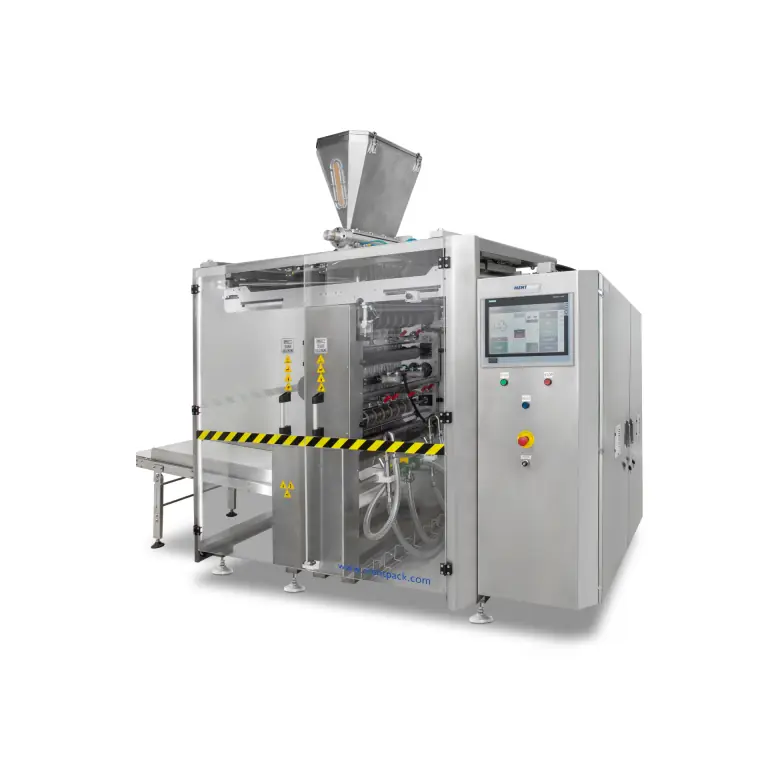
CSM1200
Continuous Motion Sachet Machine
// The Mentpack CSM1200 is an engineering masterpiece, meticulously ...

ISM400
Entry Level Intermittent Sachet Machine
// The Mentpack ISM400 represents the intelligent entry point into p...
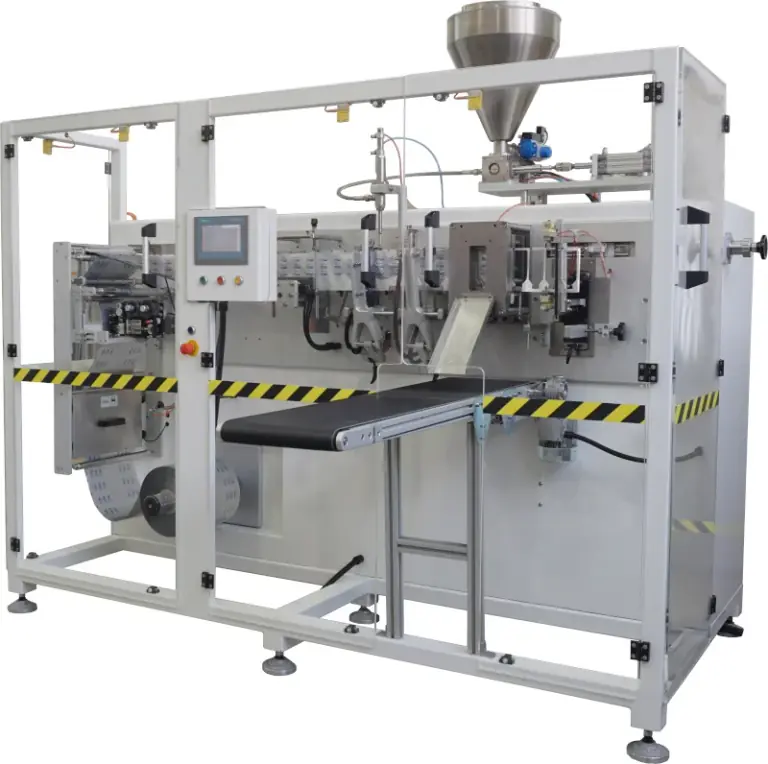
HSM
Horizontal Sachet Machine
// The Mentpack HSM Horizontal Sachet Packaging Machine is meticulou...
Stick Pack Machines

SPM1200
SPM1200 Stick Pack Machine
// SPM1200: The Apex of Stick Pack Production Unleash unparalleled ...

SPM800
SPM800 Stick Pack Machine
// ## Mentpack SPM800 Stick Pack Machine: Unleash Unparalleled Mass ...

SPM320
SPM320 Stick Pack Machine
// Introducing the **Mentpack SPM320: Maximize Your Productivity, Mi...

ARTISTICK
Artistick Stick Pack Machine
// Introducing the Artistick, Mentpack's foundational solution for p...
Vertical Form, Fill & Seal

VB-PLUS
Performance Vertical Form, Fill & Seal Machine
// Elevate your capabilities with the Performance Vertical Form, Fil...

VB
Vertical Form, Fill & Seal Machine
// Elevate your capabilities with the Vertical Form, Fill & Seal Mac...
-medium.webp?dpl=dpl_5p8EjuVk4zWrEGg9eVv9QiCSqD4e)
VB-MINI
Mini Vertical Form, Fill & Seal Machine
// Elevate your capabilities with the Mini Vertical Form, Fill & Sea...