Stevia
Comprehensive packaging solutions engineered for free-flowing granular products. Whether you are packaging sugar, salt, black pepper, instant coffee, or dry yeast, our volumetric cup dosing systems provide exact weight accuracy with minimal product waste. Built for continuous high-speed operation, these lines ensure seamless transitions and maximized throughput for single-serve sticks and sachets.
Packaging Notes
Stevia extract is dosed in tens of milligrams — the smallest portions in tabletop sweetening — where a rounding error doubles the sweetness. Because the sweetening power is concentrated into so little material, the packaging machine is judged on a tolerance band that most food products never approach. The extract is a free flowing granule, which helps it move through a filling head cleanly, but the same fineness makes it sensitive to ambient moisture: it picks up humidity, and once it does, it cakes and bridges instead of flowing. Micro-dosing augers and fine-tolerance checkweighing keep every stick identical, and barrier film prevents caking. The tabletop stick, sized like sugar but dosed like a pharmaceutical, is the category standard. Auger filling is the method that fits this product. An auger meters by controlled rotation rather than by a loose volume drop, so the smallest usable portions stay repeatable shot after shot — a volumetric cup would carry too much scatter at this scale, and the material is dry and free flowing, so no piston is needed. Micro-dosing auger sets are used, and checkweighing on a fine tolerance band closes the loop: the weight of what actually left the machine is measured, not assumed, and the auger is corrected before the deviation spreads across a shift. A stevia extract filling machine is therefore an auger machine with a metering resolution matched to a portion measured in fractions of a gram. The formats follow the way the product is sold. The stick pack is the category standard for tabletop sweetener: it looks like a sugar stick on the café table, it is opened with one hand, and it defines one cup. A stevia extract stick pack machine is the most requested configuration for that reason. Sachets are used where the portion goes into a retail carton or a hotel amenity tray, and where a wider, flatter pack carries more printed surface for brand and nutritional text. A stevia extract sachet packaging machine covers that side. Pillow bags on VFFS handle bulk and refill packs for bakery, beverage and industrial buyers who dose from a larger container rather than from single portions. In every case the barrier film choice matters as much as the machine, because the pack has to keep the granule dry until it is opened. The working dose range is 1–5 g. Output depends on how many lanes the pack width allows, not on the cycle rate alone: a CSM1200 running a narrow pack drives 12 lanes and reaches up to 960 packs per minute, while the same machine on a wide pack runs 6 lanes and delivers up to 480 packs per minute. Typical lane ranges are ARTISTICK 1–5, CSM1200 6–12, CSM600 3–7, HSM 1–3, ISM400 2–5, SPM320 1–8, SPM1200 7–12 and SPM800 4–12. The machines that run stevia extract are ARTISTICK, CSM1200, CSM600, HSM, ISM400, SPM320, SPM1200 and SPM800. Typical buyers are tabletop sweetener brands, private-label packers supplying retail and food service, contract packers running several sweetener SKUs on one line, and ingredient suppliers packing sample and portion formats for the beverage and bakery trade.
Compatible Machines
Sachet Machines
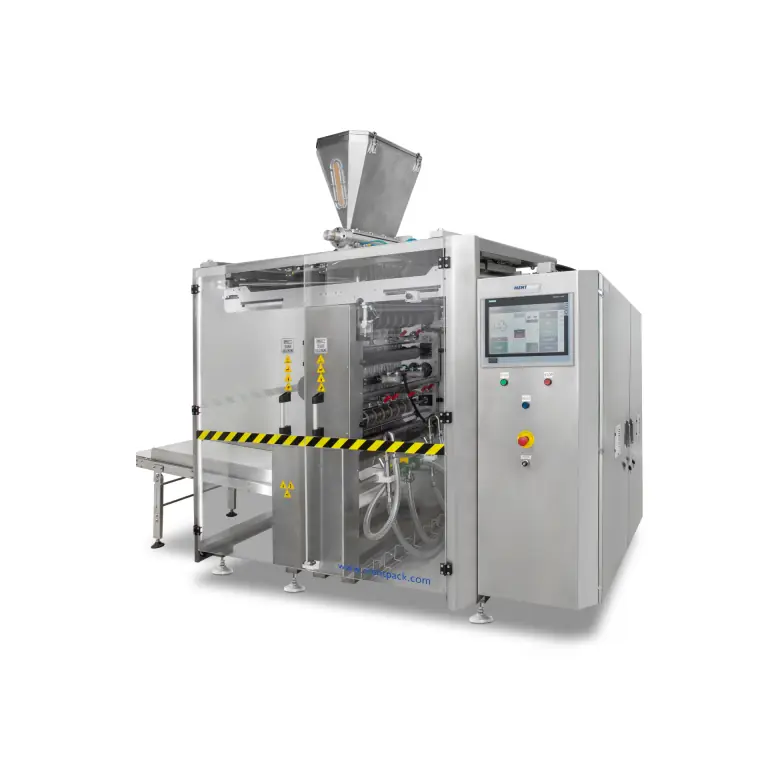
CSM1200
Continuous Motion Sachet Machine
// The Mentpack CSM1200 is an engineering masterpiece, meticulously ...

ISM400
Entry Level Intermittent Sachet Machine
// The Mentpack ISM400 represents the intelligent entry point into p...
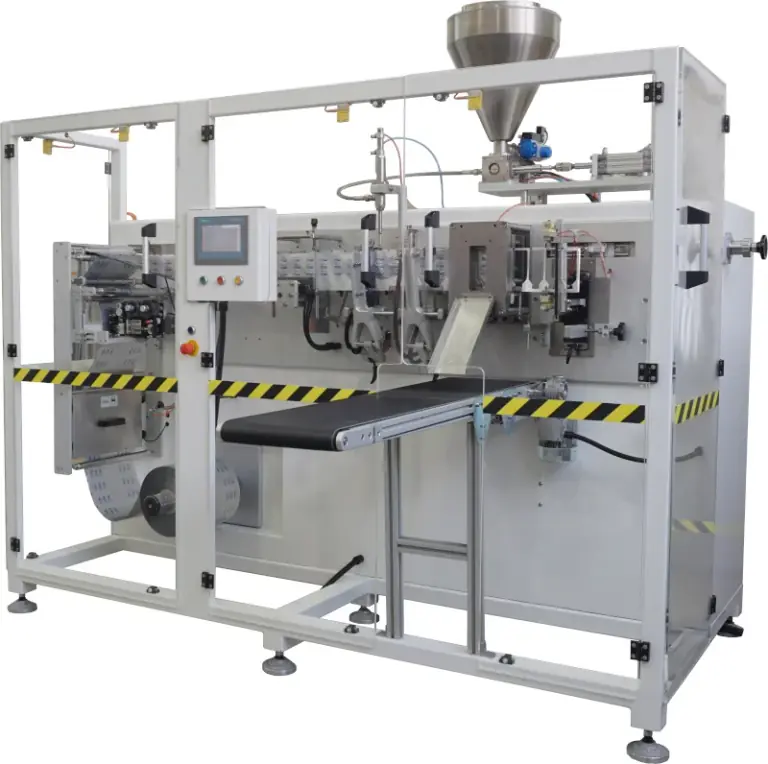
HSM
Horizontal Sachet Machine
// The Mentpack HSM Horizontal Sachet Packaging Machine is meticulou...
Stick Pack Machines

SPM1200
SPM1200 Stick Pack Machine
// SPM1200: The Apex of Stick Pack Production Unleash unparalleled ...

SPM800
SPM800 Stick Pack Machine
// ## Mentpack SPM800 Stick Pack Machine: Unleash Unparalleled Mass ...

SPM320
SPM320 Stick Pack Machine
// Introducing the **Mentpack SPM320: Maximize Your Productivity, Mi...

ARTISTICK
Artistick Stick Pack Machine
// Introducing the Artistick, Mentpack's foundational solution for p...