Tomato Paste
High-performance packaging systems engineered for liquid and viscous products. Backed by decades of industry experience and in-house engineering, our servo-driven volumetric piston fillers feature custom-designed shut-off nozzles that guarantee zero-drip precision and consistent grammage. From free-flowing beverages to thick pastes like ketchup and mayonnaise, these systems are built with high-grade stainless steel and Clean-In-Place (CIP) readiness to meet the strictest food safety standards.
Packaging Notes
Tomato paste is dense, acidic and abrasive, with pulp that can bridge in hoppers. It holds its shape instead of flowing under its own weight, clings to walls and can form a stable arch above the outlet, so a hopper left to itself will starve the dosing system within minutes. Fibrous pulp and seed fragments make the product mildly abrasive on pump surfaces and nozzle seats over long runs, and the low pH attacks contact parts that were never chosen for acid service. At cut-off the paste strings and tails, and a tail that lands on the film becomes a smear across the seal zone — the usual cause of weak seals and leaking packs on a tomato paste packaging machine. Dosing is by positive displacement. Wide product paths, agitation and acid-proof contact parts keep the paste moving, while shut-off nozzles prevent smears across the seal zone. A piston draws a measured volume from an agitated hopper and pushes it through a short, wide path to the nozzle; because the paste keeps its volume rather than draining away, the dose is set by stroke length and stays repeatable from lane to lane. Agitator and hopper scrapers break the arch before it forms and keep product presented at the pump inlet. Nozzles are sized generously for pulp, and the shut-off closes at the end of the stroke so the product column is cut cleanly instead of dripping. On a tomato paste filling machine, seals, gaskets and every product-contact surface are specified for acidity and made quick-release, because paste dries hard and stains what it touches. Two formats carry most of the volume. Stick pack is the single-portion format for kitchens and food service: single-portion sachets replace opened cans that spoil — the practical argument behind the format — and the stick travels well in catering trays, delivery bags and quick-service kitchens. Sachet, with three-side or four-side seal, takes the slightly larger portion, tears cleanly across the top and suits retail multipacks, hotels and canteens. Typical dosing runs 10 to 30 ml per pack. Output is a multi-lane figure, not a cycle figure: lane count follows pack width, so a narrow stick and a wide sachet on the same frame give very different results. An MSM1200 reaches up to 960 packs per minute with 12 lanes on a narrow pack, and 480 packs per minute on a wider pack running 6 lanes. Working models, with their lane ranges: ARTISTICK 1-5, HSM 1-3, ISM400 2-5, ISM600 3-7, MSM800 4-10, MSM1200 6-12, SPM320 1-8, SPM800 4-12, SPM1200 7-12. Choice follows portion size, pack width and the output the line has to hold. Buyers are tomato paste and sauce producers, condiment plants, food service and catering suppliers, and private-label co-packers supplying hotels, restaurants and airline kitchens — usually looking for a tomato paste stick pack machine or a tomato paste sachet packaging machine sized to their portion and their run length.
Compatible Machines
Sachet Machines

MSM1200
High Speed Intermittent Sachet Machine
// Elevate your capabilities with the MSM1200 High Speed Intermitten...
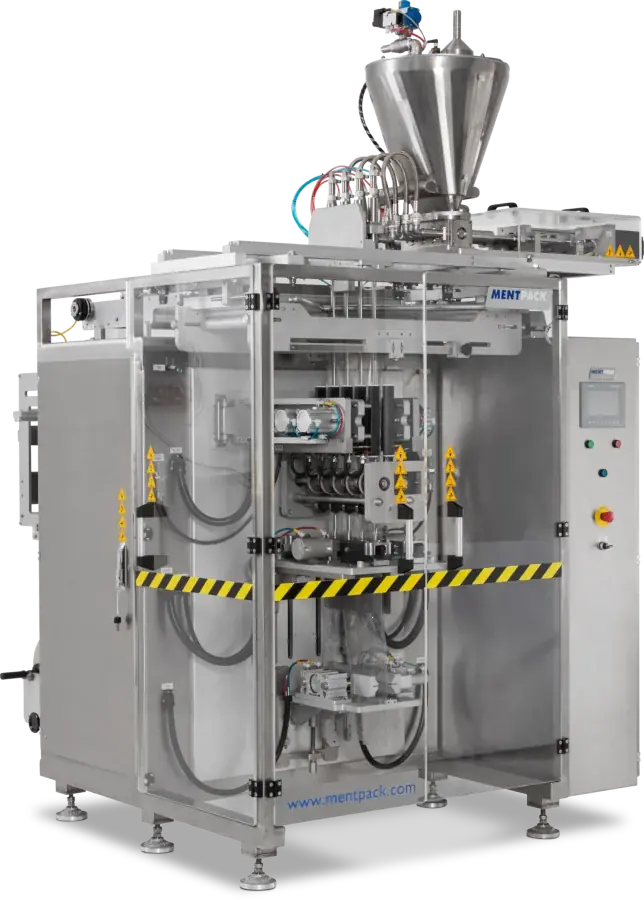
ISM600
Intermittent Sachet Machine
// Unleash unparalleled precision and flexibility in liquid sachet p...

ISM400
Entry Level Intermittent Sachet Machine
// The Mentpack ISM400 represents the intelligent entry point into p...
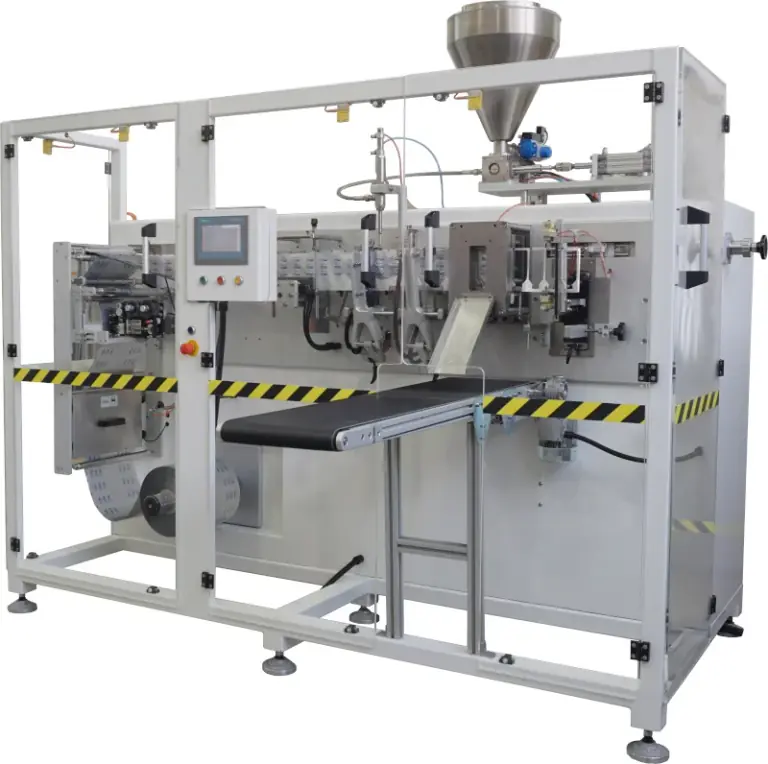
HSM
Horizontal Sachet Machine
// The Mentpack HSM Horizontal Sachet Packaging Machine is meticulou...
Stick Pack Machines

SPM1200
SPM1200 Stick Pack Machine
// SPM1200: The Apex of Stick Pack Production Unleash unparalleled ...

SPM800
SPM800 Stick Pack Machine
// ## Mentpack SPM800 Stick Pack Machine: Unleash Unparalleled Mass ...

SPM320
SPM320 Stick Pack Machine
// Introducing the **Mentpack SPM320: Maximize Your Productivity, Mi...

ARTISTICK
Artistick Stick Pack Machine
// Introducing the Artistick, Mentpack's foundational solution for p...